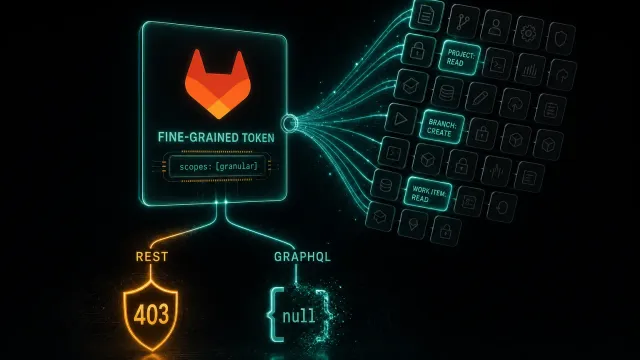
GitLab fine-grained personal access tokens, one action at a time
A GitLab fine-grained token holds a grant, not scopes: REST refuses outside it, GraphQL answers null. I derive what each API action needs, ahead of time.
Notes
Hardening notes from real production deployments — mutual TLS, Content Security Policy, and deception techniques like tarpits and honeypots that slow down or trap malicious traffic before it reaches anything that matters.
11 posts about this topic
A GitLab fine-grained token holds a grant, not scopes: REST refuses outside it, GraphQL answers null. I derive what each API action needs, ahead of time.
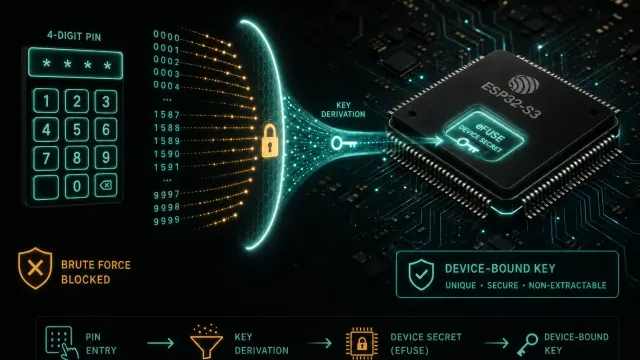
Why PBKDF2 iterations can't protect a 4-digit PIN on a microcontroller, and how an eFuse-HMAC device secret plus HKDF stops offline brute force.
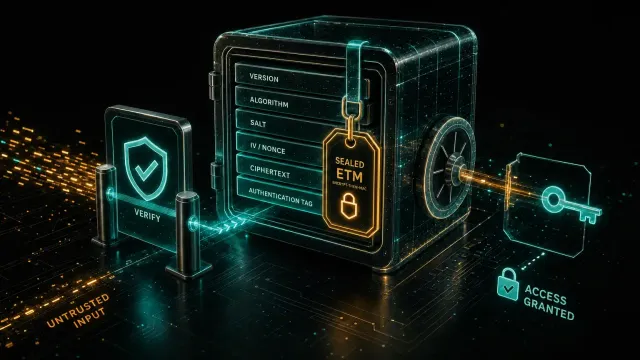
How a hardware password manager authenticates every vault file before it decrypts: encrypt-then-MAC, verify-before-decrypt, and fail-closed reads.

Guide to running obfs4 and WebTunnel Tor bridges on Linux with Nginx camouflage, firewall hardening, Prometheus monitoring, and CrowdSec.

Configure WireGuard VPN on MikroTik RouterOS with full IPv4/IPv6 dual-stack. Access your home network with native IPv6 from any connection.

Configure a MikroTik honeypot to detect port scanners, log malicious activity, and auto-block attackers using firewall address lists and the RAW table.

Implement an Nginx tarpit to slow down and trap malicious bots, vulnerability scanners, and brute-force attackers. Includes CrowdSec integration.

Deep dive into QUIC and HTTP/3 — technical architecture, security features, and step-by-step Nginx configuration for production deployment.

Master Content Security Policy from zero to A+ — nonces, hashes, strict-dynamic, Trusted Types, bypass prevention, and production Nginx configs.

Serve virtual files in Nginx without disk I/O. Covers root vs alias vs try_files, named locations, Kubernetes health endpoints, and containers.

Implement Mutual TLS (mTLS) with Nginx — create a CA, generate client certificates, configure CRL and OCSP revocation, and enable Zero Trust.
No posts match your filters.